











Listen on Apple • Listen On Spotify
Social media templates get a bad rap. Half the people who come to me swear by them. The other half think they’re a shortcut that’ll make their brand look generic. Both camps, I’d argue, are missing the point.
Canva templates done well don’t make your brand look like everyone else’s. They make your brand look like you, consistently, without taking up three hours every time you want to post a quote. The problem isn’t about using templates… it’s that most people aren’t using them correctly. In this blog, I’m going to cover
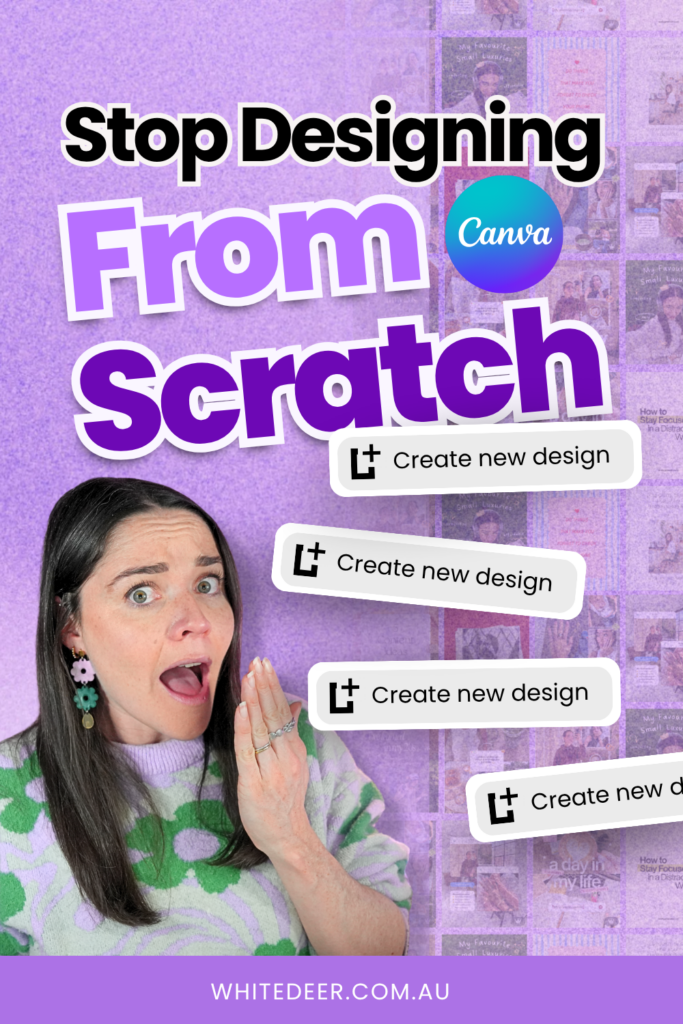
Why consistent branding is more important than you think
Before anyone reads a single word of your caption, they’ve already made a judgment call about you based on what they see. I hear from people regularly that the colour purple makes them think of me, even when another brand is using it.
That kind of instant recognition only happens when you show up consistently with the same visual style, over and over again.
Templates are what make that consistency possible without burning out.
The goal is simple: you take a design, swap in some new text or photos, and post it. That’s it. No starting from scratch, or spending hours in a design session. Just a system that makes showing up easy enough to actually do it.
Why you need a consistent brand
Here’s what I can tell you will happen at some point, without fail: you’ll get sick of your own brand. Your brain will start suggesting it’s time for a refresh. A new colour palette. A different font. Just a few small tweaks.
That voice? Shush it.
But the importance of a consistent brand is that your audience will start to recognise it. Changing direction of your visual brand at this time is like pulling up a seed the moment it’s about to sprout.
There’s also a more honest reason people start fiddling with templates and brand elements: procrastination.
It feels productive but isn’t. There are things that will grow your business more:
- Sending an email to your list
- Refining a sales funnel
- Showing up for your audience
Template-tweaking tends to be what people do instead of those key things that’ll move the needle for your business.
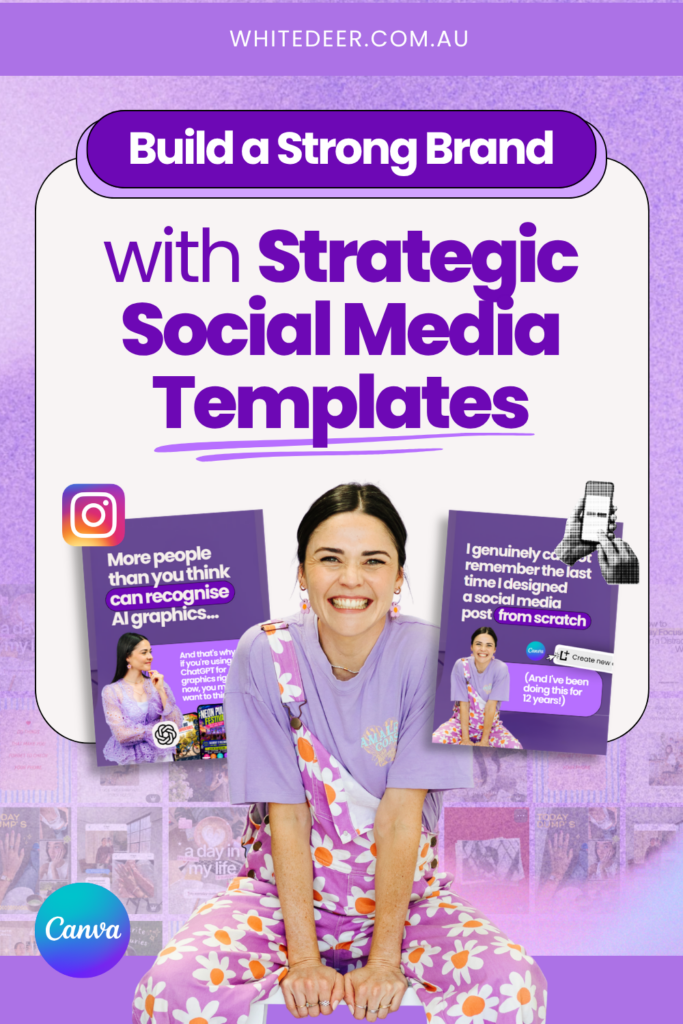
The 4 things to consider before you build a branded template
I’ve designed templates for clients who never used them, and I don’t want that to happen to you. Before you spend any time or money on templates, get clear on these four things:
1. What you’re actually posting
There’s no point getting a podcast promo template if you don’t have a podcast. Start with what you’re currently posting, or what you genuinely want to post, and build around that. Look at your feed.
Look at what your audience responds to.
Work out the styles and formats that make sense for your business.
2. How often you’re posting
If you post twice a week and both posts use the same two templates, your grid will feel repetitive fast. Even with a low posting frequency, you’ll want a few variations of the same style (maybe three different quote layouts) so things don’t start looking like a copy-paste feed.
3. What assets you have available
A template built around cut-out professional photos won’t work if you’re shooting iPhone selfies. Take stock of what you actually have:
- Branded photography
- Canva stock images
- Product shots
- Phone selfies
And create templates that work with those marketing assets, not against them.
4. What your audience is already responding to
Canva templates are great, but some of them are designed for what was trending five years ago. Spend five minutes on your Instagram Explore tab and pay attention to what’s actually performing right now – the layouts, the text treatments, the style of post. That’s where your template inspiration should come from.
Templates that don’t match your content, your assets, and your audience won’t get used. So do the thinking first before you create.
Design strategy that actually grows your brand
Templates are not the whole strategy, I want to be really clear on that. A grid full of perfectly polished Canva carousels starts to feel inauthentic over time. People can feel when everything is curated to within an inch of its life.
The goal is a mix.
Beautifully designed posts build professional credibility and trust, especially if you’re earlier in business or under 10,000 followers on Instagram. But they need to be balanced with more organic, real content: a selfie, a talking-to-camera reel, something that shows the person behind the brand.
Some of my best-performing posts haven’t been the ones I spent hours on in Canva. They’ve been a quick reel, casually filmed.
My rough guide: roughly one-for-one. One curated carousel or designed post, one more casual or selfie-style post. The exact ratio matters less than having both.
How can you get professional branded Canva templates?
Once you’re clear on what you need, you’ve got two paths:
DIY your own Canva templates
If you have the time, brand clarity, and want to learn the skills, my free Design Masterclass covers the design fundamentals and Canva shortcuts you need to build quality templates yourself.
Get templates done for you
My design studio offers a custom social media template pack: 12 sets of templates, built around your brand and content, all inside Canva so you and your team can edit them yourselves. Just look up the Pick and Mix section on my website.
Having a system in place makes showing up feel easy instead of exhausting. Because when posting feels easy, you post more, and your audience actually starts to see you more.
WORK WITH JACQUI:
// DIY Design My Biz: The best course for business owners DIYing their own brand and graphics in Canva. Learn more: https://whitedeer.com.au/diy-dmb
// The Co+Creation Design Club: Design WITH the help of a professional designer in this high-touch coaching space: https://whitedeer.com.au/designclub
// Design Studio: If you’re after fully done-for-you design services my studio team can help! https://whitedeer.com.au/designstudio