











Listen on Apple • Listen On Spotify
Picture someone scrolling past your brand. They stop. They think, ooh, this looks like it might be for me. And they haven’t read a single word yet.
That’s the power of really well-done design, and it matters more than most of us want to admit, because people decide within milliseconds whether your brand or business is for them. The next level up is getting them to feel it on a personal level, like this product or service was made with them in mind.
This is the third and final part of my series on building a brand that gets seen. In this blog, I cover building a brand that prequalifies your audience, plus the way I work out what an audience likes without assuming they love purple just because I do.

Why your brand needs to repel the wrong people
When someone sees a brand they recognise and resonate with, they’re so much more likely to say, yes, I want to work with them. When they see something bland and non-descriptive, they can’t tell if it’s for them, so they keep scrolling.
My own brand is colourful, purple, bright and playful. It’s not going to attract everyone. A straight-down-the-line corporate man in his 60s might love it (if so, welcome to my world), but most of the time it draws in women with a creative bent who are a little more playful. That was done on purpose.
How a business niche can attract more of the right people
I know, niching gets a good rap or a bad rap depending on which business coaches you follow. I honestly don’t mind how you do it. You can niche by:
- type of person
- demographic
- things they like
I just believe you should niche to some extent, because I can guarantee your product is not for everybody, unless it’s maybe water.
The more specific you get, the more you become the go-to person.
Labrador owners who also love birds is a niche. Female business owners is a niche. Either is fine. And niching doesn’t mean you’ll never work with anyone outside it.
I still have some great guys in my course and in the studio, but 90 to 95% of the time I’m attracting women in business, which works well for both of us.
If you’re sitting in a bit of scarcity here, thinking there won’t be enough people left, friend, there are a ton of people in this world.
How to get clear on what kind of clients you love working with
If you don’t have a niche yet, start with who you’ve already worked with. Who do you love working with the most?
Which clients light you up?
Who buys from you and raves about it?
Can you get more people like that?
Your audience is allowed to evolve over time. You just need a clear starting point.
What happened when I built a brand around what I thought my audience loved
Here’s my cautionary tale. My first brand was grey and white. My second was hot pink and white. Neither hit the mark, for me or for my ideal audience.
The pink logic seemed solid. I love working with women in business. What do women love?
Pink. The problem was, they hate hot pink.
And I felt a disconnect with my own brand, which made it harder to show up.
I was sharing my brand less.
I wasn’t directing people to my Instagram because I felt shame around it.
So I don’t just do what my audience loves anymore.
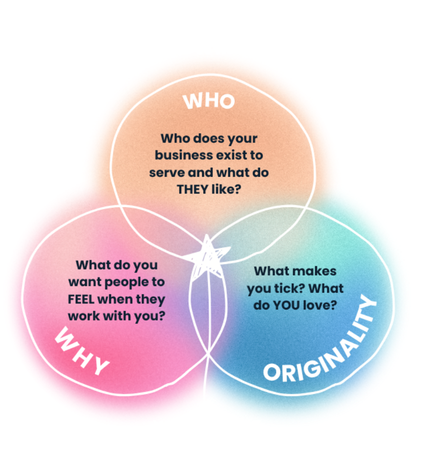
This is where my WOW model comes in (I covered it last week). Your brand needs to cover three areas: who your target audience is, what you love as a person so you feel connected to it, and what you want people to feel when they work with you.
You’re looking for the overlap of all three.
How to find out what your audience loves
The first way to find out what your audience loves is to ask them. I know, wild.
- Use Instagram story polls. Make images in Canva with the colours, styles or fonts you’re tossing up between, then add a poll sticker. I usually start a poll series with a qualifier, something like “if you fit this description, give me your opinion on these next few stories”. Why? My husband, my mum and my friends all follow me, and they’re not my ideal client. You can also scroll through who voted for each option and discount the cousins and aunties.
- Jump on a call. Pop a free calendar booking link on your stories, offer to pick their brain for 5 minutes, and send a little freebie PDF as a thank you. Nobody walks around knowing their favourite font, so don’t ask that. Ask what kind of feel they’d expect from a business like yours, or share your screen with some Pinterest inspiration and get their reaction.
Whatever you do, don’t post in a giant Facebook group asking which logo is best. If they’re not your target audience, their opinion shouldn’t matter.
Everyone has different opinions, and that’s normal. You don’t have to treat them as gospel. Look for patterns.
Maybe they all like pastel versions of different colours, or everyone hates red, or everyone expects a clean, fancy-pants font. For bonus points, give people examples to react to, because they might not know what they like, but they know when they like something.
Key takeaway: Only ask your target audience, and look for patterns rather than winners.
How to do audience research before building your brand
Pay attention to the businesses your dream clients follow. If you have a few in mind, go to their Instagram, click “following” and look for patterns.
Earthy and natural? Playful and flirty? There may or may not be a clear pattern, but it’s free research.
You can also ask AI what your target audience usually likes, or search Pinterest for phrases that describe them, like “beachy graphic design” if they all love the beach, and see what visual patterns show up.

Why your brand isn’t something that’s “forever”
Once you’ve built something out, ask again. Maybe a final-two palette poll or a final-two logo poll, or just a handful of people you know are perfect-fit clients. Then start using it and see who it draws in.
A friend I did a brand for recently is changing her niche and asked me if her brand still fits. Honestly? I don’t know, but test it.
Sometimes we don’t know until we know. At one point I was using a lot of clouds in my branding, and it was attracting people who were a bit more woo than I’d work well with, so I dulled it down to feel more grounded.
Have a testing period of a month or so, then commit. Constant tweaking can become procrastination.
Why you need to use your brand consistently
Every Instagram post, flyer and website graphic should look like it’s from the same family: same colours, same fonts, same overall visual style. Your audience’s visual journey might start with a friend’s recommendation, a reel or a Google search, and you want every touchpoint to speak to them.
Consistency is also how people begin to recognise you. If someone’s interested in what I have to say and they see something purple, they think, oh, what’s Jacqui got to say today? That doesn’t happen if I’m changing my brand all the time.
Ready to build a strategic brand?
If you love the idea of a brand that attracts your ideal audience and that you feel confident showing up with, I’d love to have you in DIY Design My Biz. It’s a whole program that takes you through building your brand from start to finish with strategy (including the WOW model), then teaches you to apply it to Instagram posts, flyers, workbooks and lead magnets, with Canva tutorials and templates along the way. You also get support from me and my team through monthly calls and the Facebook group.
Over 650 business owners have been through it so far, and it’s a way to get a professional brand you fully own without spending $10,000 on a designer.
WORK WITH JACQUI:
// DIY Design My Biz: The best course for business owners DIYing their own brand and graphics in Canva. Learn more: https://whitedeer.com.au/diy-dmb
// The Co+Creation Design Club: Design WITH the help of a professional designer in this high-touch coaching space: https://whitedeer.com.au/designclub
// Design Studio: If you’re after fully done-for-you design services my studio team can help! https://whitedeer.com.au/designstudio